

Let’s determine the right security solution for your needs together
Contact Us

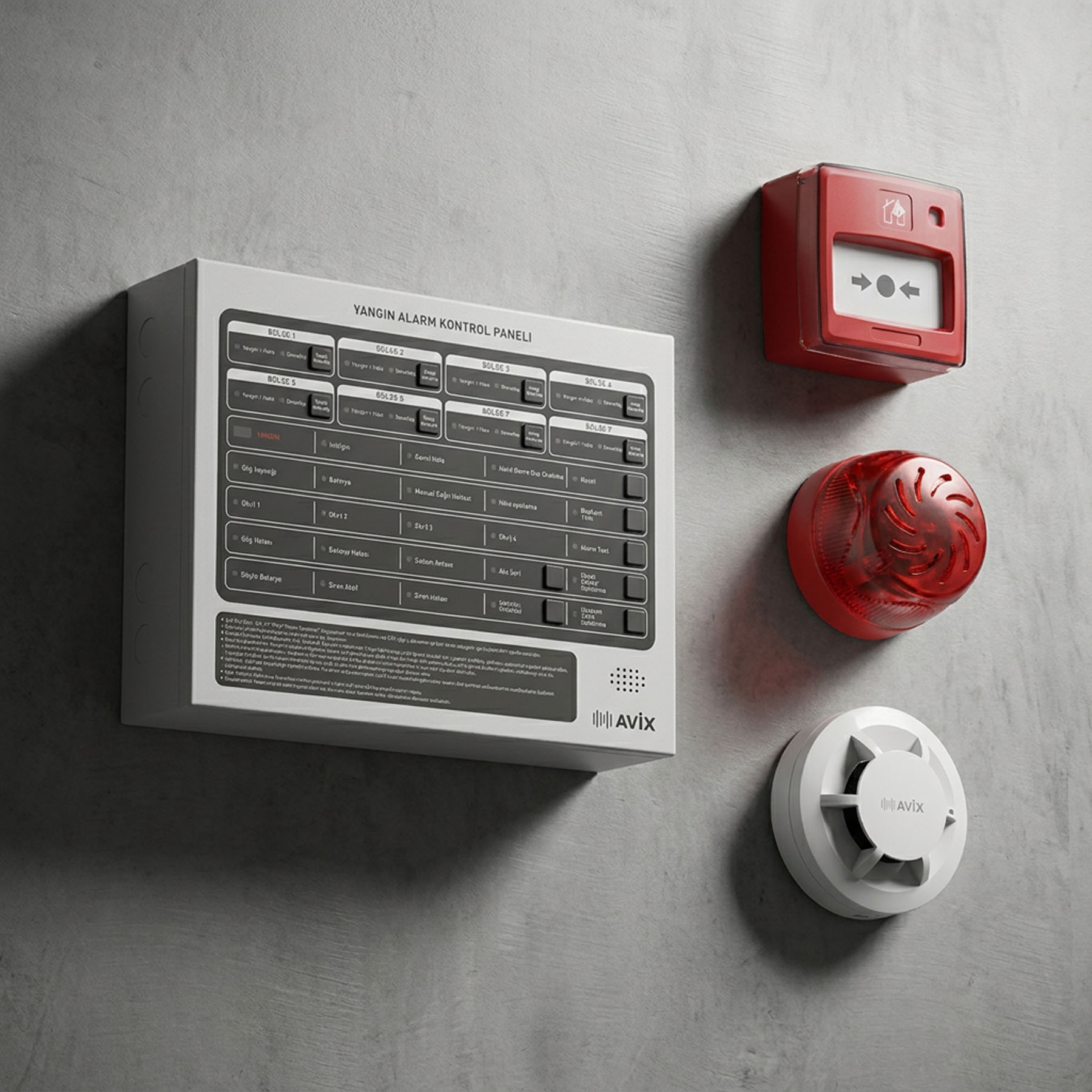
A conventional fire alarm system protects a building by dividing it into zones. The detectors belonging to each zone are wired on a single line back to the panel. When a fire is detected, the panel shows which zone the event came from — but it does not identify which individual detector triggered.
This is the essential difference from an addressable system. In an addressable system every device carries its own address and the panel reports "3rd floor, boiler room, detector 47". A conventional panel simply reports "Zone 4", and the team walks that zone to locate the fire.
That difference does not make the system inferior. When zones are kept small, the search takes moments. For small and mid-sized buildings a conventional system is both adequate and economical.
Each line leaving the panel feeds one zone, and a line typically carries 20–25 devices. Zone boundaries are not drawn arbitrarily; they follow the escape strategy and the fire compartments.
Common practice is as follows:
The zone count determines the panel. A building with four zones needs a four-zone panel; where future expansion is likely, the next model up is the safer choice.
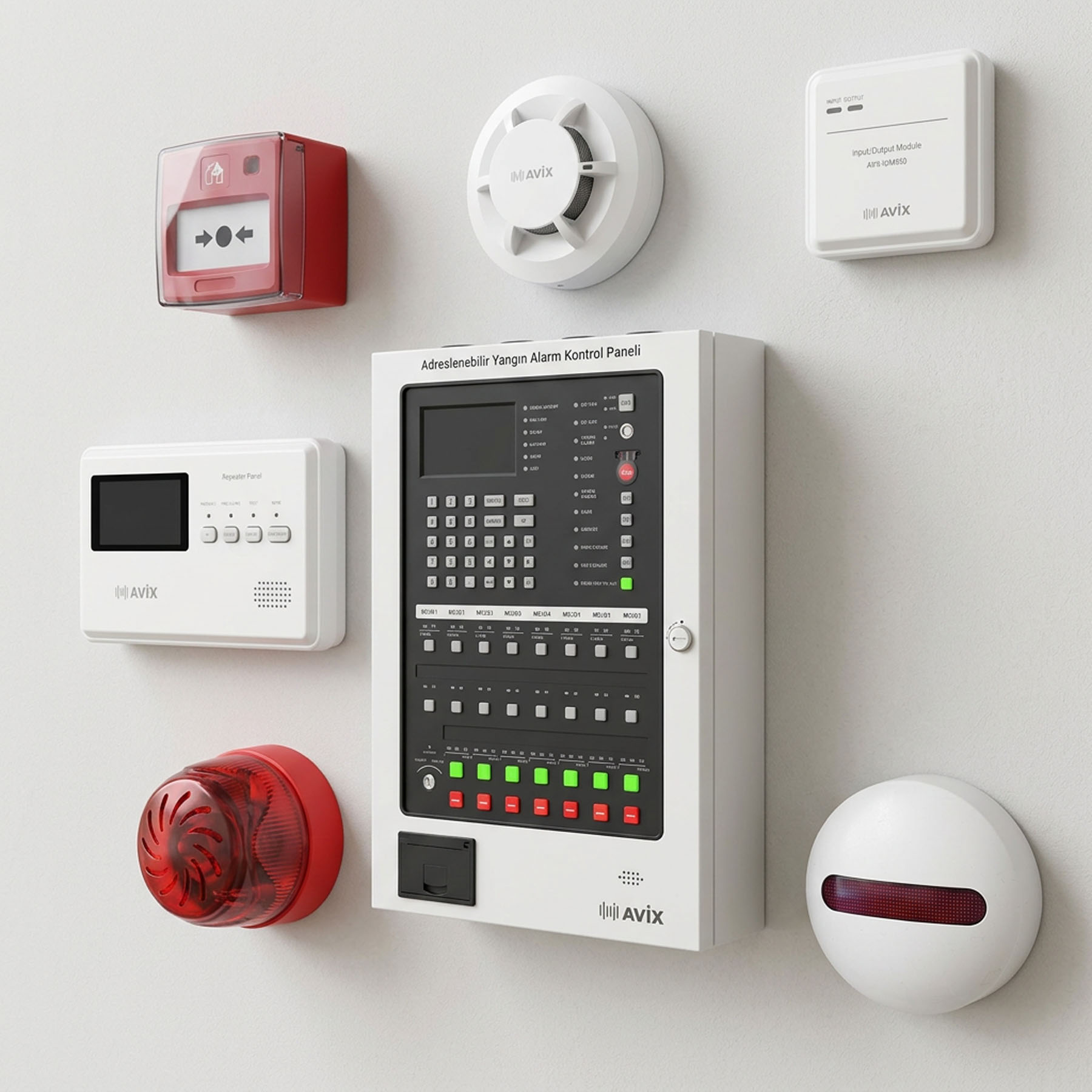
The heart of the system. It supervises the zone lines, indicates alarm and fault conditions, drives the sounder circuits and charges the standby battery. Models with 2, 4, 6 and 8 zones are common. On mains failure the system must remain in standby for 24 hours and then sound the alarm for 30 minutes; the battery is sized accordingly.
Detects slow-developing, smouldering fires early. It is the standard device for offices, corridors, hotel rooms and dwellings. On a flat ceiling in still air, one detector covers a radius of about 7.5 metres, up to 112 m². Point smoke detectors are mounted no higher than 10.5 metres above floor level.
Used where a smoke detector would produce false alarms: kitchens, laundries, boiler rooms, car parks. There are two classes and they must not be confused:
A heat detector covers less than a smoke detector: 5.3 metre radius, up to 56.3 m². In the same space you will need roughly twice as many heat detectors as smoke detectors.
Lets a person raise the alarm before the system does. Call points are placed on escape routes, at stair landings and beside doors leading outside, at 1.4 metres above floor level. From any point in the building the travel distance to the nearest call point must not exceed 30 metres.
The alarm signal must reach at least 65 dB(A) everywhere in the building, or 10 dB(A) above ambient noise, whichever is greater. Where people sleep, 75 dB(A) is required at the bed head; a corridor sounder cannot achieve that through a closed door, so a separate sounder is needed inside the room. Beacon types are mandatory in buildings used by people with hearing impairment.
Every point detector sits on a mounting base. Fire-resistant cable is used, and an end-of-line resistor lets the panel supervise the circuit for breaks.
The decision comes down to building size and search time.
A conventional system is sufficient when: the zone count stays within eight, floor plates are small, zones are easy to walk, and budget is decisive. Small business centres, apartment blocks, schools, small hotels and workshops fall into this group.
An addressable system is required when: the building is large and maze-like, device counts run into the hundreds, each device must be monitored individually, or the location of a fire has to be known within seconds. Hospitals, shopping centres, high-rise buildings, hotels and factories fall into this group.
There is a middle path: a conventional panel for a small building, with a route to addressable as it grows. That possibility should be considered when the cabling infrastructure is planned.
Smoke cools and thins as it rises. Above a certain height it can no longer reach the ceiling and hangs below it as a layer. This is called stratification, and a ceiling-mounted point detector will see the fire late.
The practical bands are:
Warehouses, hangars, sports halls, production halls and atrium buildings are protected this way.
Area alone is not enough. The following conditions affect detector counts directly:
An installed system loses its reliability without maintenance. Detector chambers collect dust, batteries age, line resistances drift. Regular servicing is both a regulatory requirement and a decisive factor for insurance.
A service visit covers: review of panel fault logs, test triggering from every zone, smoke and heat testing of detectors, call point tests, sounder level measurement, battery voltage and capacity checks, verification of standby duration, line resistance measurement and reporting.
We provide design, installation, commissioning and scheduled maintenance for fire detection systems. Alongside conventional and addressable systems we carry out integration work with CCTV, access control and intruder alarm systems.
Get in touch for a bill of materials and a budget figure for your project. We also carry out site surveys for the maintenance or replacement of existing systems.