

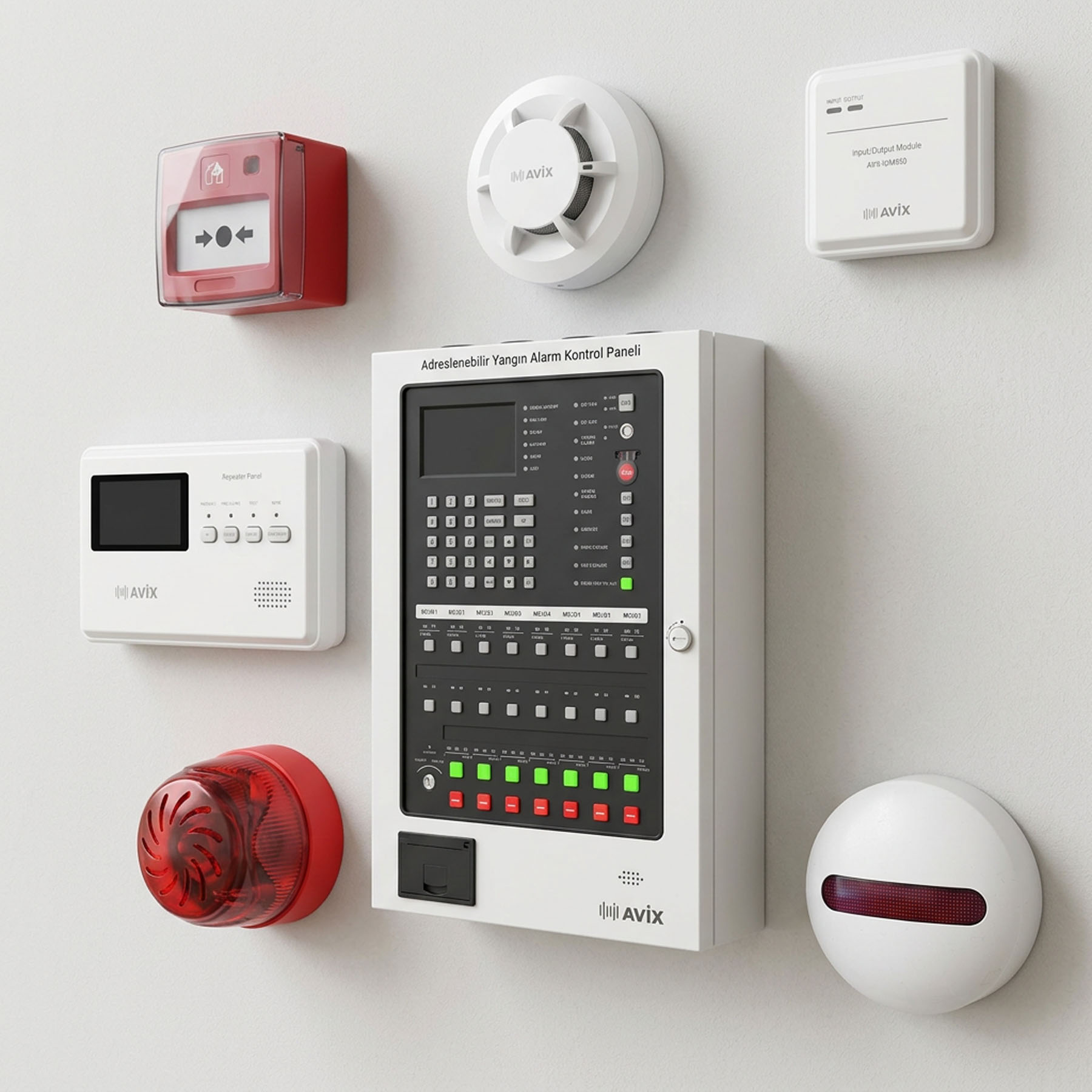
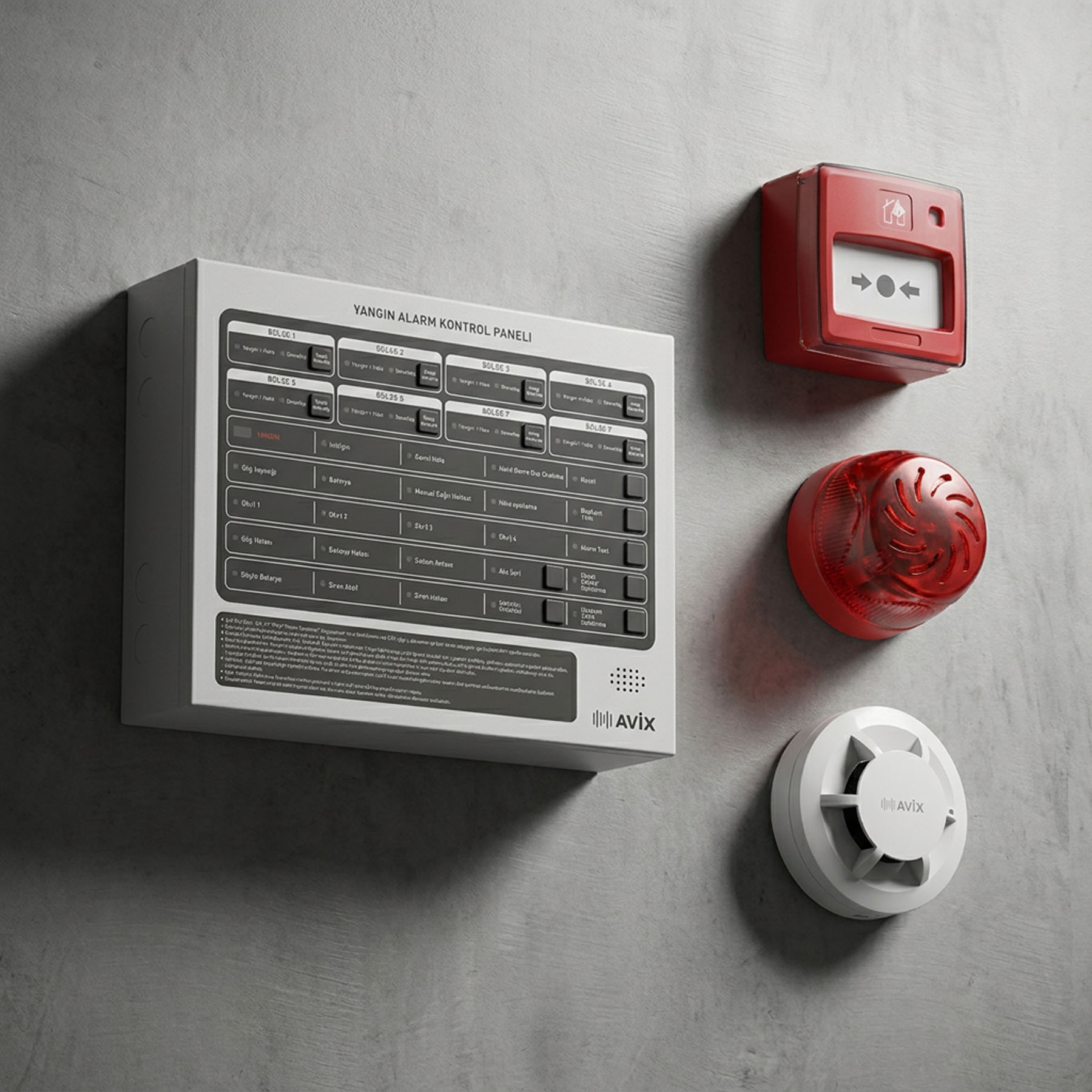
A Category A2S heat detector operates on the fixed temperature threshold alone. It does not consider the rate of temperature rise. This is a deliberate choice, not a limitation.
In spaces where ambient temperature changes quickly through the day, a rate-of-rise device produces unnecessary alarms. On a sun-exposed roof level the temperature climbs sharply in the afternoon; an A2R model can read that as a fire. An A2S does not.
Technical specifications
- Product code: ESP-CHD600-S
- Detection principle: NTC thermistor
- EN 54 category: A2S (fixed threshold only, static)
- Fixed temperature threshold: 54–70 °C range, 62 °C nominal
- Rate-of-rise detection: none
- Supply voltage: 19 – 29 V DC
- Standby current: ≤ 35 µA
- Alarm current: 27 mA @ 24 V DC
- Polarity: polarity sensitive
- Operating temperature: −10 °C ÷ +50 °C
- Relative humidity: ≤ 95% non-condensing
- Protection class: IP30
- Dimensions (incl. base): Ø101.8 × 50.3 mm
- Base: ESPO-B01
- Design standard: EN 54-5:2017+A1:2018 (certification in progress)
Where A2S is preferred
Sun-exposed roof levels and spaces under terraces. Temperature climbs sharply on summer afternoons.
Near ovens, hobs and heat sources. Ambient temperature jumps when the equipment runs.
Warehouses with frequently opened doors. Incoming outside air creates sudden temperature changes.
Production lines with steam or thermal fluctuation. Process-driven temperature variation.
In these spaces an A2R model produces constant false alarms and the outcome is usually the same: the zone gets disabled. A disabled zone is an unprotected zone.
The limitation of A2S
Static operation carries a cost: in a fast-developing fire, an A2S responds later than an A2R. It waits until the temperature reaches 62 °C.
For that reason A2S is not used everywhere. Where temperature is stable, A2R is the choice. The selection follows the conditions of the space; it is not a question of cost.
Difference from ESP-CHD600-R
The two models use identical hardware and share the same housing. The difference is in the software and is identified by the product code.
This needs attention on site: the two devices look the same. Labels should be checked during installation and the model code recorded in the device address list.
How many are needed
CEN/TS 54-14 defines a detection radius of 5.7 metres for point type heat detectors. They are spaced more closely than smoke detectors, because heat travels more slowly than smoke.
Maintenance
With no optical chamber, the device tolerates contamination well. At the annual service it is tested by bringing it up to its temperature threshold, using a heat gun or a purpose-made test tool.


