


One of the first decisions in any fire detection project is whether the system will be addressable or conventional. This choice affects not only budget but how quickly a response team reaches the right point during a fire.
How a conventional system works
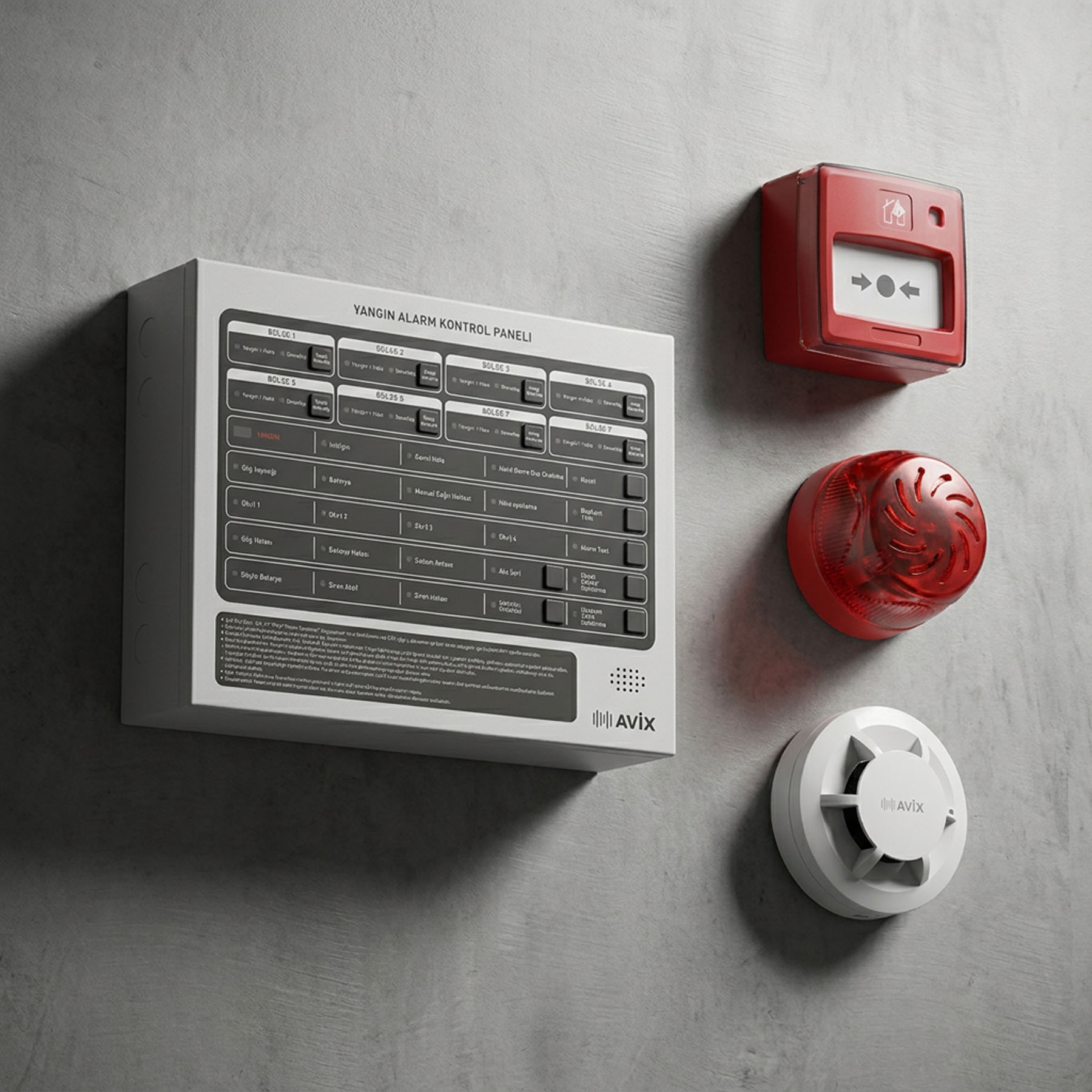
In conventional systems, detectors are wired to the panel by zone. Each zone has its own cable run and is represented by a single indicator on the panel.
When a detector activates, the panel reports: "fire in zone 3." If that zone contains twelve detectors, you cannot tell which one triggered. The team must search the zone physically.
This is workable in small, simply planned buildings. As a building grows, however, a "zone" becomes an increasingly vague address.
What an addressable system changes
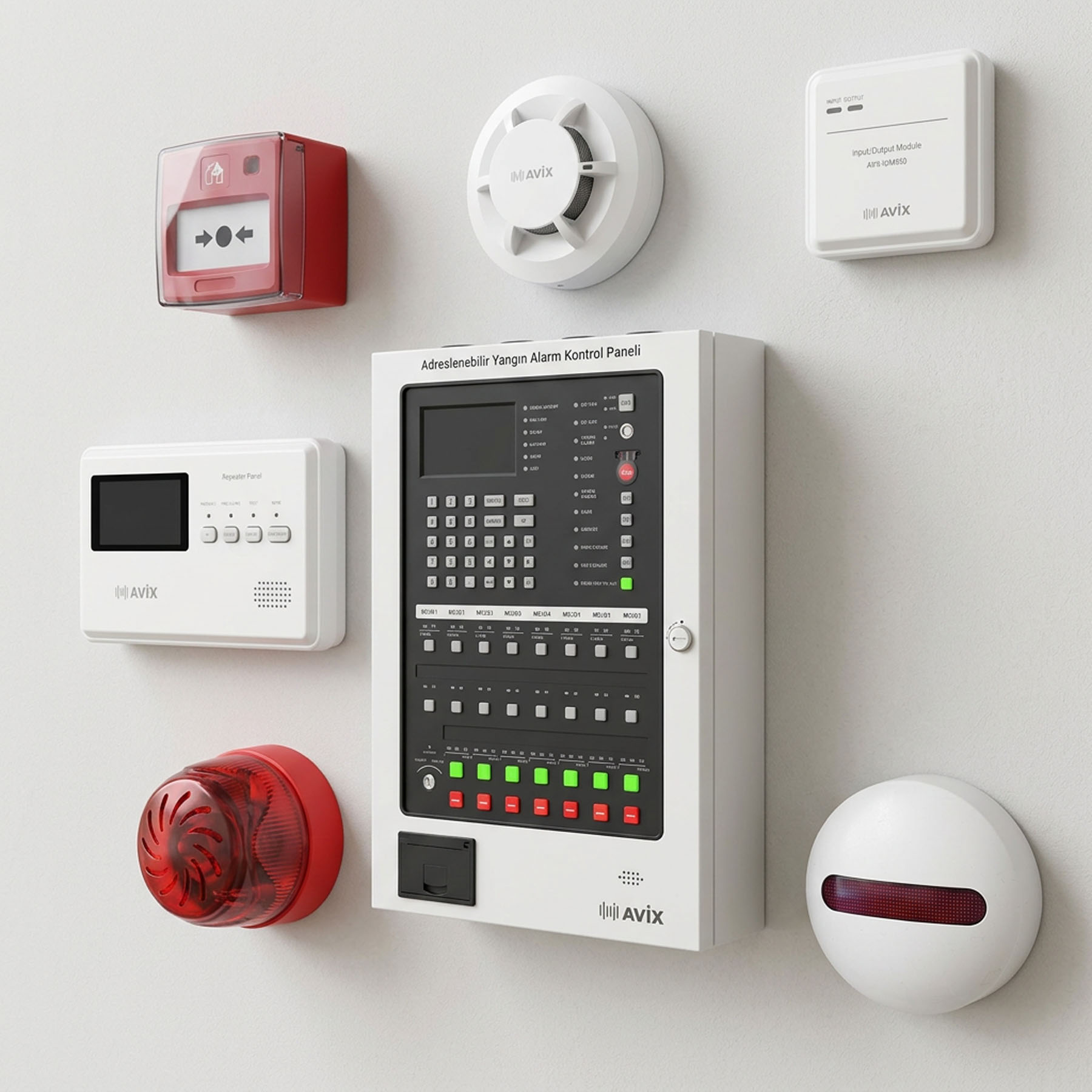
In addressable systems every device — detector, call point, sounder, module — carries a unique address on the loop, and the panel communicates with each individually.
The panel reports: "Loop 2, Address 47 — Third Floor Operating Theatre Corridor, Optical Smoke Detector."
Faster response
The search phase disappears entirely. The team goes straight to the point. Given how quickly a fire grows with every minute lost, this alone is decisive.
Simpler cabling
A conventional system needs a separate run per zone; an addressable loop can carry hundreds of devices. In large buildings the saving in cable and labour recovers much of the difference in panel cost.
Fault reporting at device level
A contaminated detector, a broken line or a removed device is reported by name. Maintenance teams arrive knowing what to look for.
Cause and effect control
A specific detector can close a fire damper, send lifts to the evacuation floor, start smoke extraction or release door holders. Conventional systems support this only crudely.
Fewer false alarms
Addressable detectors compensate for gradual contamination and can raise a pre-alarm before reaching the alarm threshold — significant in hotels and hospitals where unnecessary evacuation is costly.
Short-circuit isolators
One of the least discussed but most valuable features of an addressable system is the short-circuit isolator. When a short occurs on the loop, isolators disconnect only the faulty section; the rest of the loop keeps working. A short on a conventional line blinds the entire zone. Where fire has damaged cabling, this difference decides whether the system works at all.
Which building needs which
Conventional is reasonable for: small offices, limited-area stores, single-storey premises, simple layouts with no more than eight zones.
Addressable is necessary for: hospitals, hotels and accommodation, shopping centres, manufacturing plants, high-rise buildings, data centres, schools and dormitories, multi-block residential complexes.
As a rough threshold: once device count passes 40-50, once the building spans multiple floors, or once responders cannot be assumed to know the layout, addressable is not merely better — it is the correct choice.
Comparing cost properly
Addressable equipment costs more per unit, but comparing equipment alone is misleading. A proper calculation includes:
- Cable quantity and containment
- Electrical labour and installation time
- Maintenance cost over the system's life
- The operational cost of false alarms — evacuation, production stoppage, guest experience
- Expandability: will each future device need a new cable run?
On medium and large projects these items together usually put addressable ahead on total cost of ownership.
Standard conformity applies either way
Whichever system type is chosen, equipment must be certified to the TS EN 54 series — covering the control panel (EN 54-2), power supply (EN 54-4), smoke detectors (EN 54-7), heat detectors (EN 54-5), manual call points (EN 54-11) and alarm devices (EN 54-3 and EN 54-23).
A system built with uncertified equipment will not pass inspection even if it functions, and creates serious difficulty in insurance claims.
Five questions before deciding
- How many floors and what total floor area?
- What is the estimated device count?
- Is there a technical team on site around the clock?
- Are there other systems to be triggered automatically — dampers, lifts, smoke extraction, sprinkler monitoring?
- Will the building be extended or subdivided later?
Let us specify the right system for your project
Yansis manufactures, designs and commissions addressable fire detection and alarm systems. Contact our engineering team to discuss a system suited to your building's layout and risk profile.
