

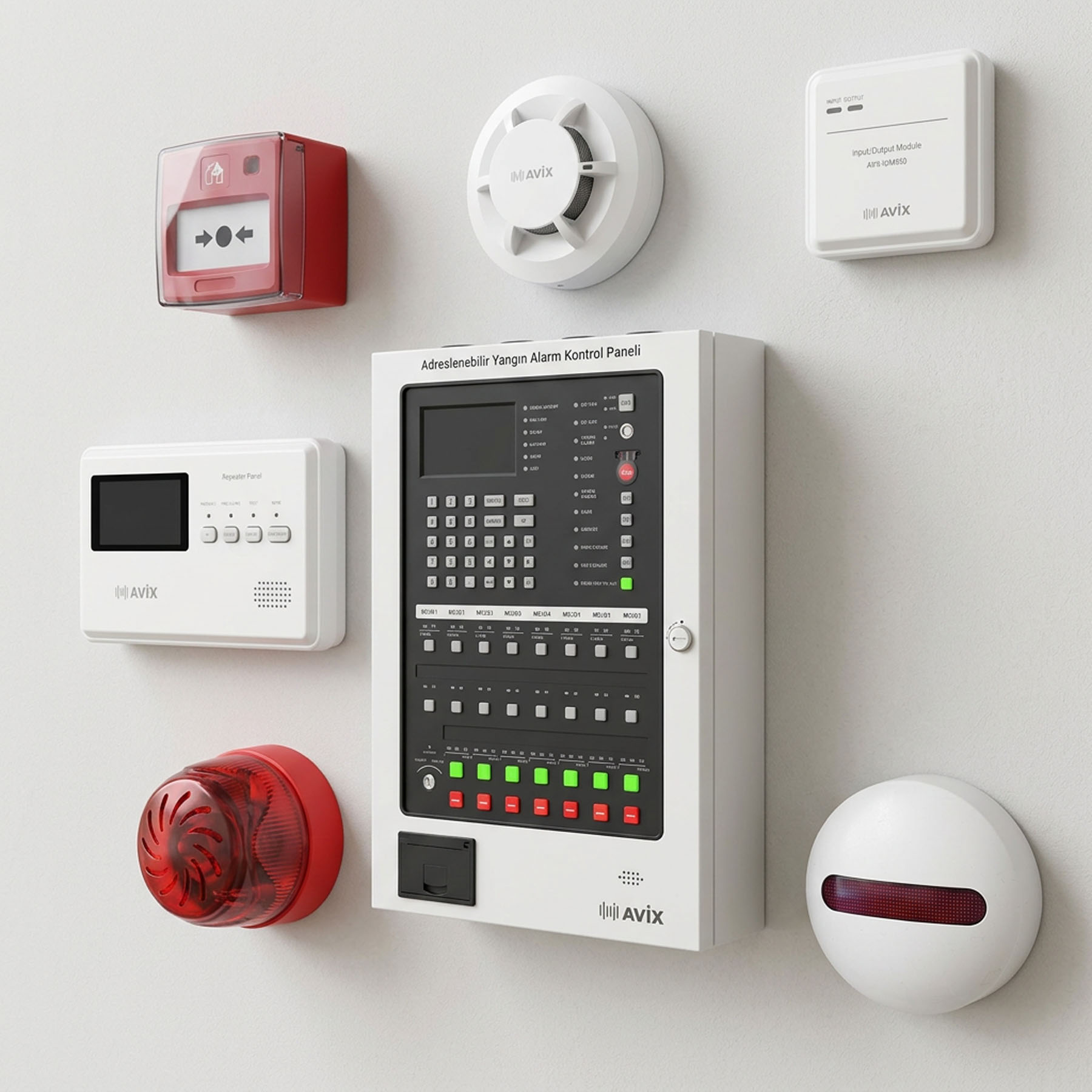
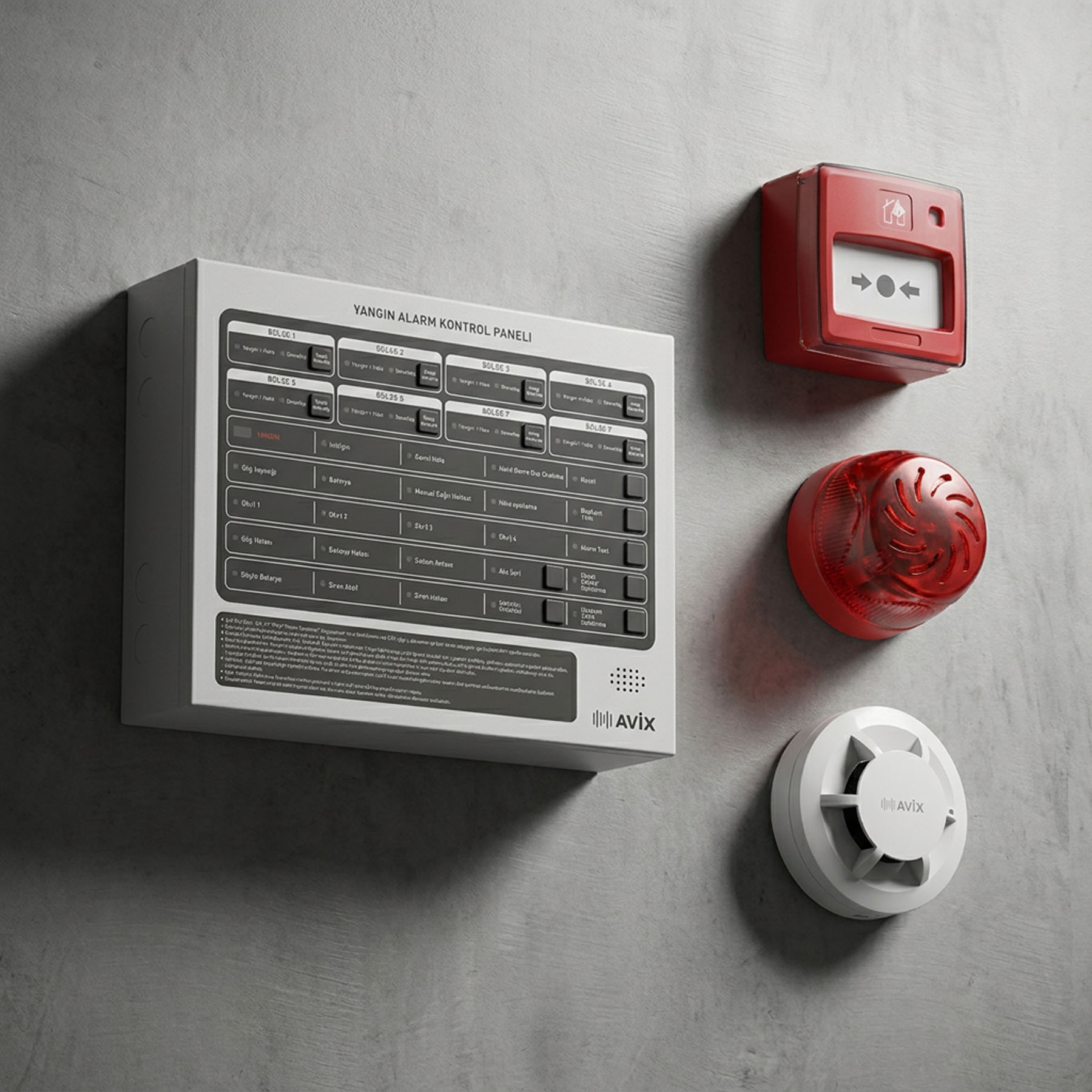
Automatic detectors sense smoke or heat. But the first to see a fire is usually a person, and that person has to be able to set the system going. That is what a manual call point is for.
It looks like a simple device. Its siting is defined by regulation and is among the most frequently misapplied details on site.
Mounting height
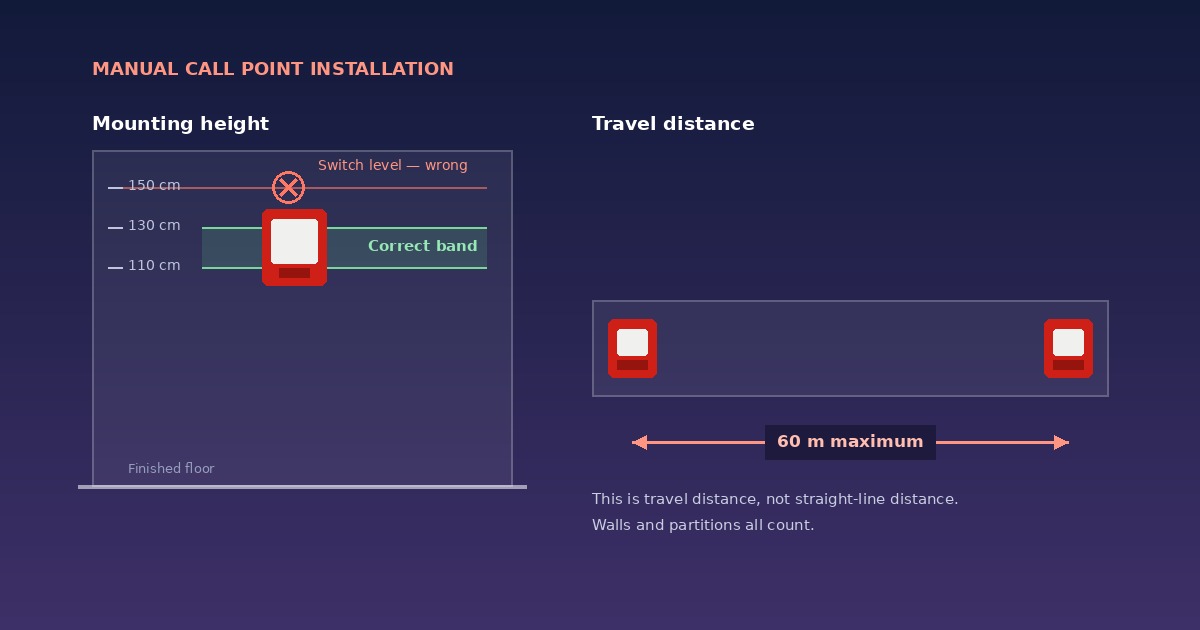
Turkish fire regulations require manual call points to be mounted at a height between 110 cm and 130 cm above floor level.
The range is not arbitrary. It targets the band where the natural hand position of a standing adult overlaps with the reach of someone in a wheelchair.
The most common error on site is raising the call point to around 150 cm to line up with light switches. It looks tidy; it does not comply.
Travel distance
Regulations require that the horizontal travel distance from any point on a floor to the nearest call point does not exceed 60 metres. In buildings used by people with disabilities or older occupants, that distance is reduced.
One point deserves attention: this is travel distance, not straight-line distance. Walls, partitions and circulation routes all count. Sixty metres is easily achieved in open plan; the same floor area, heavily partitioned, may need two call points.
Where they go
On escape routes. A call point should be where the person who saw the fire is already heading. They should pass it on their way out, not have to divert to find it.
At stair landings and near final exits. Stair entrances and doors to the outside are natural convergence points.
Visible and accessible. A call point behind a door, beside a cabinet, behind a curtain or behind stacked goods effectively does not exist. In warehouses this recurs constantly: the call point was sited correctly and pallets gradually piled up in front of it.
Resettable or break-glass
Two common types exist, and the difference shows up after use.
Break-glass. Operated by breaking a thin glass element, which is replaced afterwards. If no spare glass is available, the call point stays out of service.
Resettable. A flexible element is pressed and returned to position with a key or a purpose-made tool. No consumable is needed and testing is straightforward.
Call points are tested at periodic maintenance. Every test consumes a glass on break-glass units and nothing on resettable ones. On sites with many call points, that difference becomes visible in the annual maintenance cost.
Standard and connection
Manual call points fall under EN 54-11. On a conventional system they can share a zone circuit with detectors, but giving them their own zone makes response easier: "call point in zone 3" on the panel is a different piece of information from "alarm in zone 3".
On an addressable system each call point has its own address and the panel names exactly which one was operated.
Three common mistakes
Wrong height. Mounting in line with light switches. The quickest error for an inspector to spot.
Access blocked. A call point that was accessible at installation ends up behind a cupboard or a rack six months later. This is what visual inspection at periodic maintenance is for.
Left unlabelled. If the device does not say what it is and how to operate it, it will not be used in a moment of panic. Labelling must be legible and in the local language.
Summary
The manual call point is the human side of the system. Before automatic detection takes over, it lets the person who saw the fire raise the alarm within seconds.
Correct height, correct distance and a clear approach — unless all three hold, the call point is there for appearance only.
To review call point siting in your building, you can request a free site survey.
