

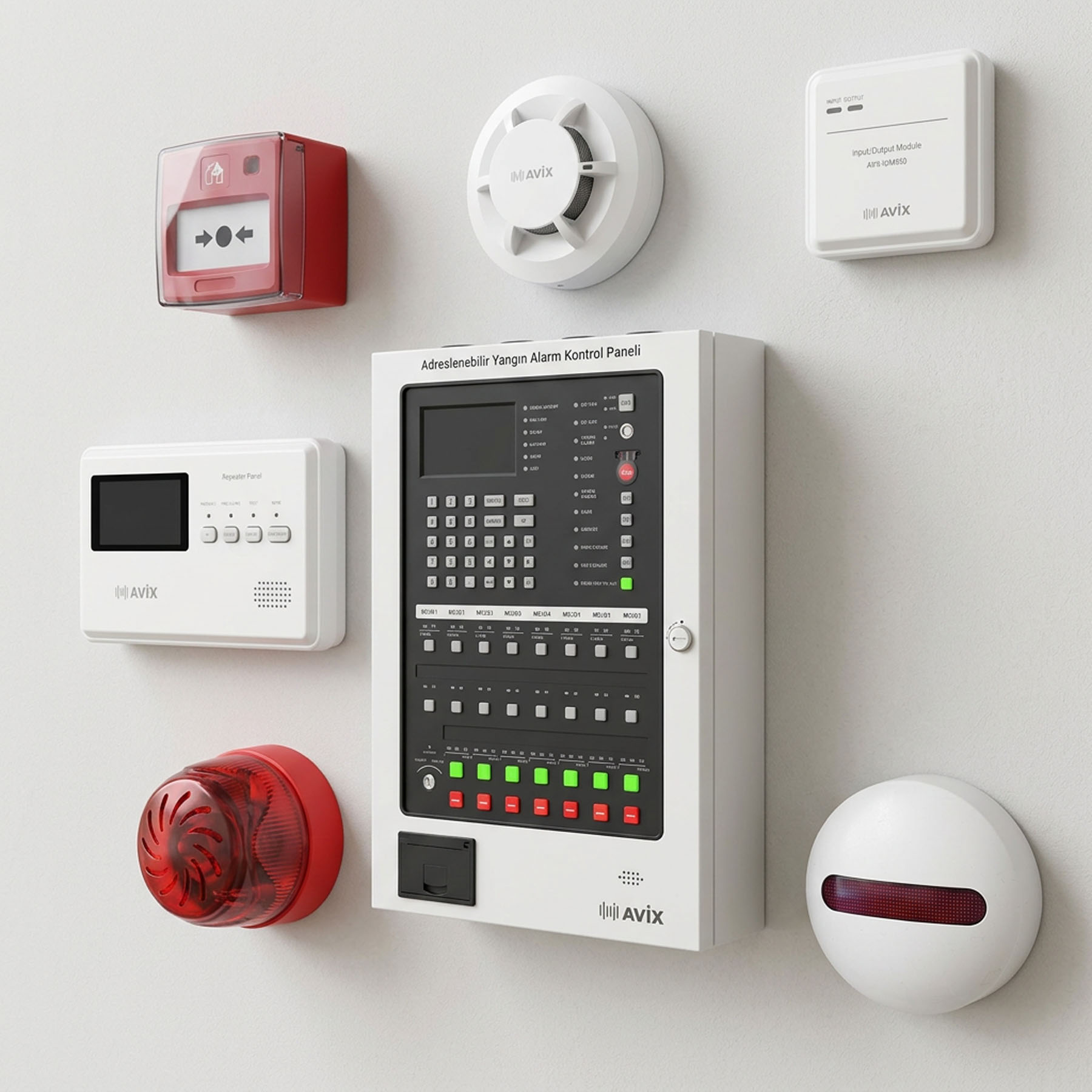
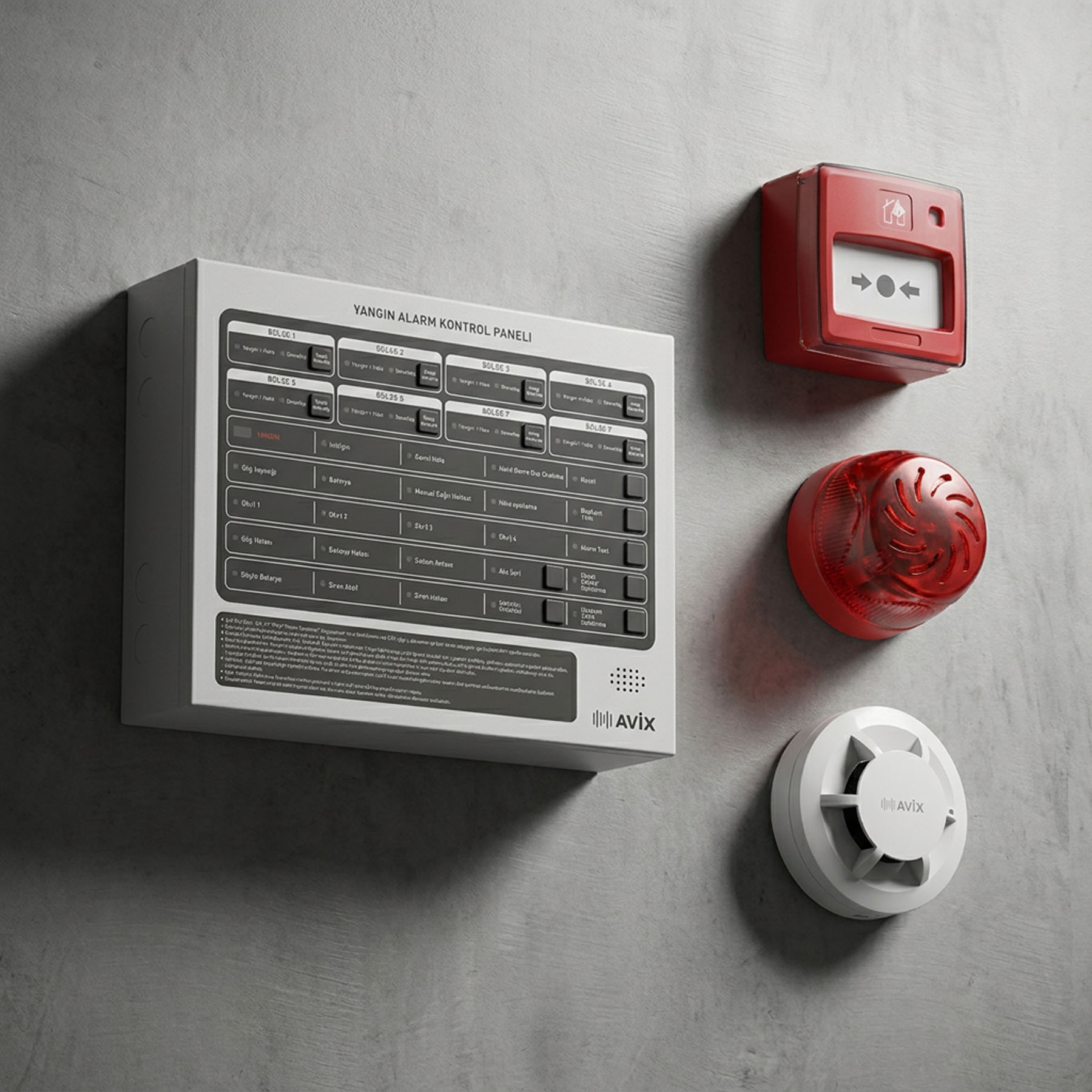
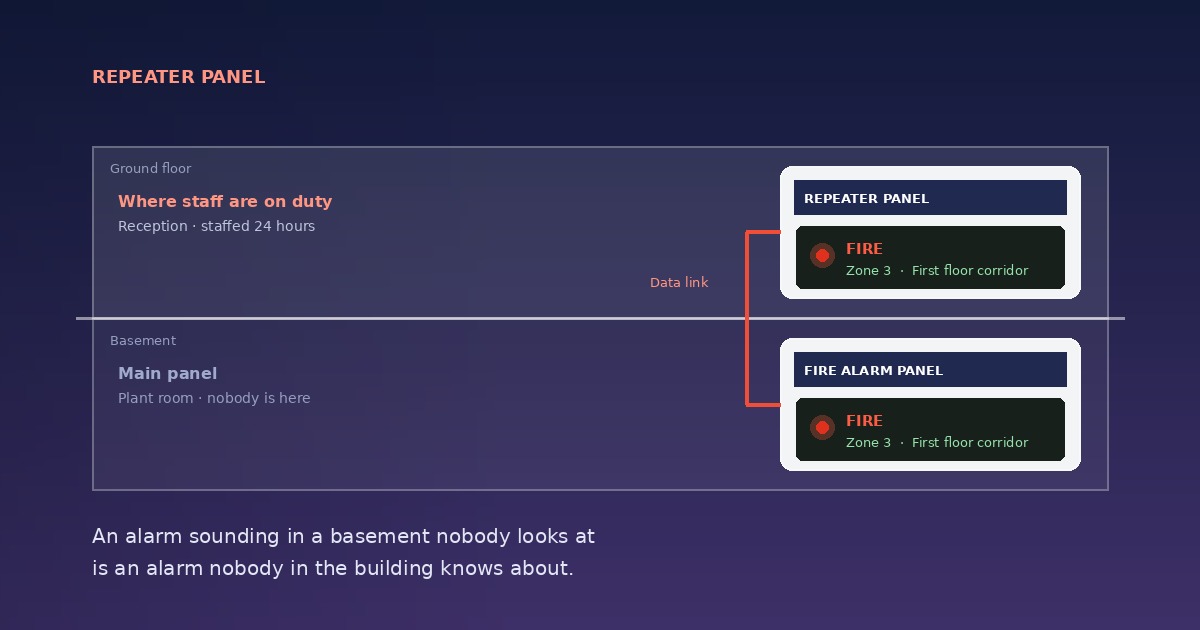
A fire alarm panel usually sits in a plant room, an electrical room or a basement. When the alarm sounds, somebody in the building has to reach it. A repeater panel removes that distance.
What it does
A repeater panel mirrors what the main panel displays at another location. Alarm condition, fault condition, which zone or which address — all of it appears on the second screen.
It connects to the main panel over a data link and draws its supply from the main panel as well. It is not a separate system; it is a second window onto the same one.
How it differs from the main panel
A repeater is for monitoring. Depending on access level it may permit limited operations such as silence and reset, but system programming, zone disablement and cause and effect settings stay at the main panel.
This split is deliberate: the system is configured from one point and monitored from several.
Where it is used
Reception and security desks. In hotels, hospitals, office buildings and managed estates, this is where somebody is on duty around the clock. The person who will respond first is not standing next to the main panel.
Firefighter entry point. When a fire crew enters a building they need to know where the fire is. A repeater sited near the entrance saves them hunting for a plant room in the basement.
Separate blocks. Where several blocks run from one panel, staff in each block need to see the system from their own position.
Large facilities. In factories and logistics centres the walk to the panel is measured in minutes. Minutes are expensive in a fire.
How many are needed
The number is driven not by floor area but by how many points are permanently staffed. If somebody is present at a location around the clock and is expected to respond to an alarm, they need to be able to see the state of the system from there.
The number of repeaters a main panel can support is limited by the manufacturer, and total data link length also enters the calculation. This is settled at design stage.
A common mistake
Putting a repeater on the reception desk and telling nobody what it is. A fault indication burns on the screen for weeks and the person on duty has no idea what it means. Staff should be given brief operating instruction at commissioning, and basic instructions should be posted beside the panel.
The second mistake is treating the repeater as the main panel. Faults are dealt with at the main panel; the repeater exists to show the problem, not to fix it.
Summary
A repeater panel is not an expensive extra. It is the part that makes the system visible. An alarm sounding in a basement nobody looks at is an alarm nobody in the building knows about.
For support with repeater panel siting, you can request a free site survey.
