

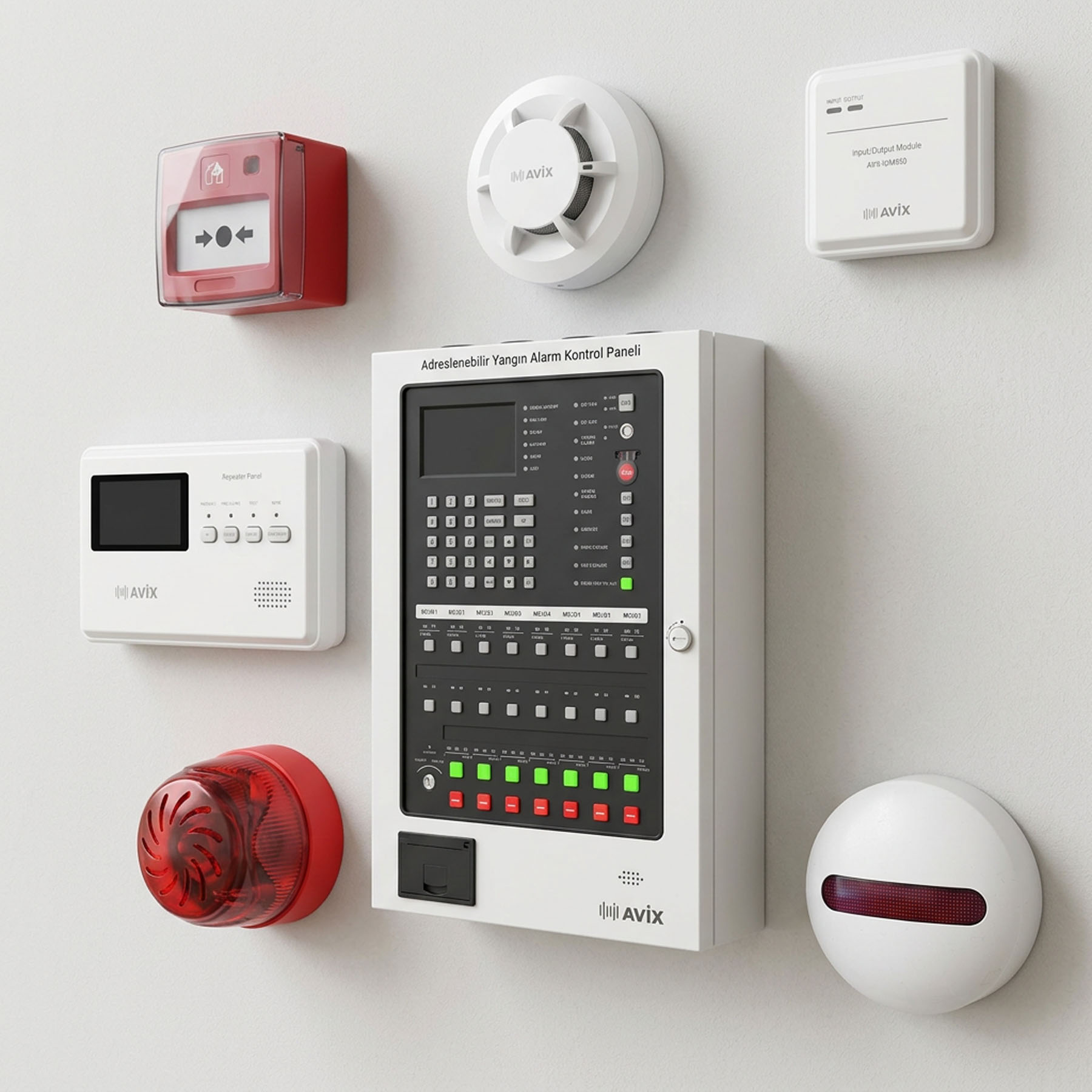
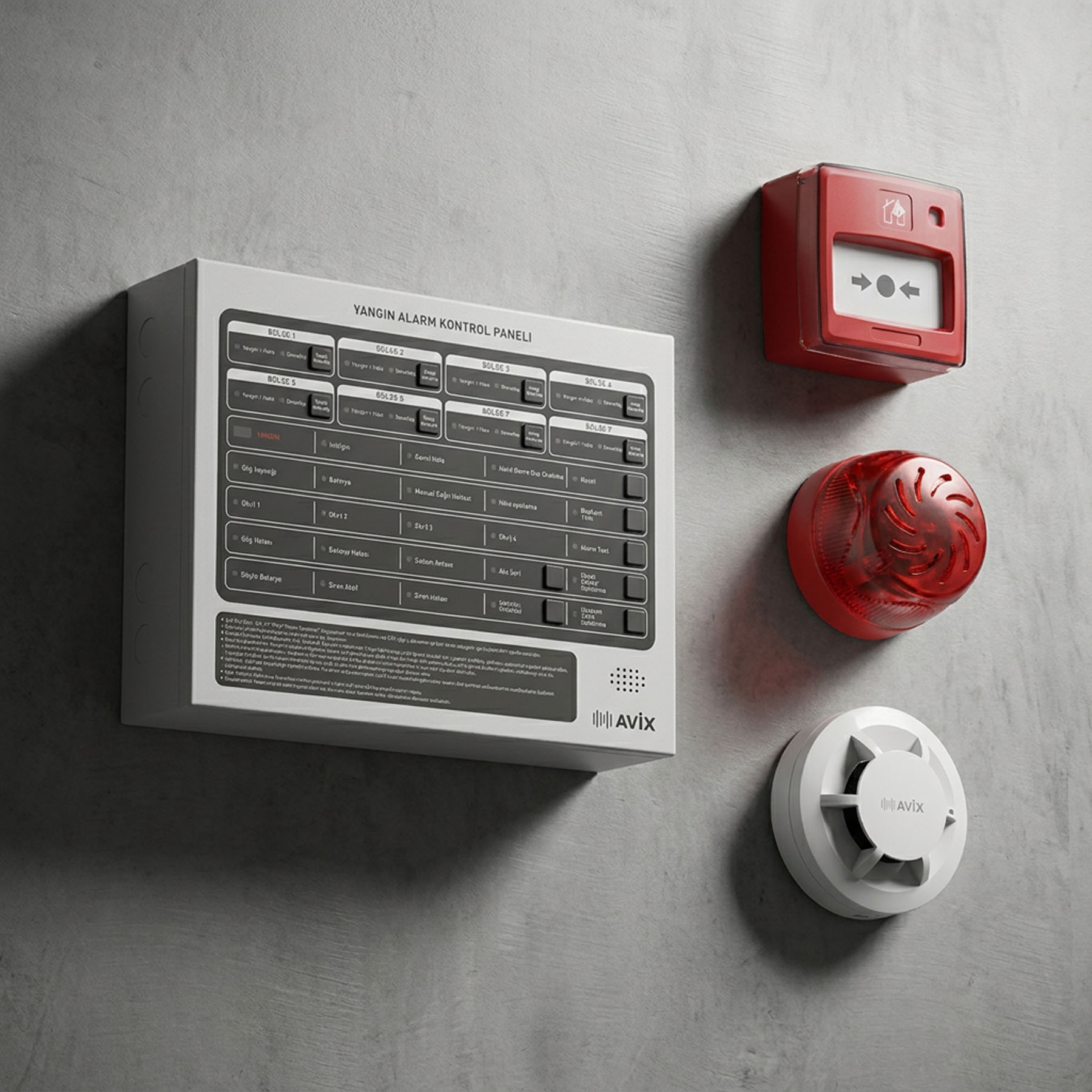

Whether a building needs an automatic fire detection system depends on three variables: occupancy class, height, and the high-risk rooms it contains. Each is assessed separately.
Where the obligation comes from
The governing text in Türkiye is the Regulation on Fire Protection of Buildings, in force since 2007. Its annexes set out which buildings, at which scales, must have a detection system. This is a legal obligation, not a recommendation, and compliance is inspected by the authority that issues construction permits.
1. By occupancy class
Certain building types fall within scope directly, because of occupant density or because occupants cannot evacuate unaided:
- Accommodation — hotels, motels, guesthouses, serviced apartments
- Healthcare — hospitals, clinics, care homes
- Education — schools, nurseries, dormitories
- Assembly — shopping centres, cinemas, theatres, sports halls, places of worship
- High-rise and large commercial buildings
- Industrial facilities and warehouses, particularly those holding combustibles
- Public buildings
For these, the question is not whether a system is needed but what its scope will be.
2. By height
Buildings exceeding defined height thresholds are classified as high-rise and carry additional obligations. The thresholds are 21.50 m building height and 30.50 m structure height.
The two terms differ: building height is measured from the reference level to the eaves, while structure height includes basement levels. Exceeding either one places the building in the high-rise class.
In these buildings, detection is designed together with phased evacuation, stairwell pressurisation and smoke control. Conventional systems are not adequate in practice.
3. By high-risk room
This is the most frequently overlooked category. Even where a building is otherwise out of scope, certain spaces must be protected in their own right:
- Boiler rooms
- Enclosed car parks
- Electrical and transformer rooms
- Generator rooms
- Fuel stores
- Refuse rooms
- Archives and storage areas
- Lift machine rooms
- Escape routes, stairwells and landings
This is where we most often find gaps on site: a detector on the apartment staircase, nothing in the boiler room or car park — the very spaces where fires frequently start.
Are existing buildings exempt?
No. Buildings permitted before the regulation came into force are classified as "existing buildings" and remain in scope. A 2025 amendment gave them until 31 December 2025 to complete outstanding work. That period has ended and inspections are underway.
What inspection looks for
Meeting the obligation is not simply a matter of installing devices. Inspection requires:
- Equipment certified to the TS EN 54 series
- Design carried out to TS CEN/TS 54-14
- The system commissioned and tested
- Alarm audible throughout all occupied spaces
- Records showing periodic maintenance has been performed
- Conformity certificates and design documentation on file
Let us assess your building
We evaluate which system your building requires based on its occupancy class, height and room schedule. Contact our team for a survey and system design.
This article is for general information. Building-specific obligations require the opinion of the competent authority and review by a qualified engineer.
